Núcleo Nacional: Spain’s Emerging Neo-Nazi Threat
The group’s recruitment infrastructure, international extremist connections and reported military training in Ukraine raise questions about its growing ambitions and potential for violence.
On November 6, Spanish police arrested 14 suspected members of Núcleo Nacional (National Nucleus, or NN), a neo-Nazi organisation that emerged from the anti-government protests outside the Socialist Party’s headquarters in Madrid in late 2023. Established as an association in 2024, NN subsequently expanded its territorial organisation and recruitment activities.
The police investigation revealed activities extending well beyond demonstrations and online propaganda. Five NN members had travelled to Ukraine, at least two reportedly receiving firearms training while there. Intercepted communications among NN members exposed discussions of an armed uprising and earlier exchanges involving members of White Boys Asturias, a neo-Nazi group linked to NN's recruitment activities in northern Spain, exposed threats against religious institutions and migrant facilities in the country.
Of the 14 detained on November 6, 10 were subsequently released subject to precautionary measures, including restrictions on international travel. The broader judicial investigation into NN’s activities remains ongoing. Beyond the specific allegations against NN members, the case raises broader questions about how a fringe extremist movement can develop increasingly sophisticated organisational structures and potentially violent capabilities.
While political polarisation and social unrest may facilitate recruitment and mobilisation, understanding NN’s evolution also requires examining the wider ecosystem of domestic and transnational networks through which extremist actors can access resources, expertise and opportunities for cooperation.
Extremism in Spain’s Protest Landscape
From Spain’s transition to democracy in the 1970s until Vox’s electoral breakthrough in 2018, the country was widely regarded as an exception to the rise of the electoral far right elsewhere in Europe. . While extremist organisations continued to operate in the country, they remained fragmented and largely marginal in national politics. The rise of Vox changed that electoral picture but did not eliminate the distinction between parliamentary radical-right politics and explicitly anti-democratic extremist organisations.
NN belongs to the latter category. The movement brought together activists with backgrounds in older neo-Nazi groups, including Bastión Frontal, and the ultranationalist organisations Democracia Nacional and Hacer Nación, and combined nationalist and anti-immigration propaganda with public demonstrations, recruitment activities, and physical training.
Since then, the group has gained visibility by participating in protests organised around widely shared grievances. NN members have appeared at demonstrations concerning immigration, housing and opposition to the government. More recently, group members attended protests about the July 2026 Ceuta migration crisis, including a demonstration outside the Moroccan embassy in Madrid. On September 2, outside the Spanish Congress in Madrid, NN members joined a demonstration that Ceuta residents organised under the slogan Ceuta nos une (“Ceuta Unites Us”). Unlike the larger, separate rally in support of Ceuta held that day in Madrid’s Plaza de Cibeles, where NN’s participation was not reported, the demonstration outside Congress ended in violent clashes between protesters and police, leaving four officers injured and four people arrested, including two minors. Participants in the demonstration also chanted racist and anti-Muslim slogans.
Although NN members participated in the demonstration, available reporting does not establish their responsibility for the subsequent clashes with police. Nevertheless, these overlapping protest environments may allow extremist organisations such as NN to position themselves within wider public mobilisations, gain visibility beyond established extremist circles and reach potential recruits.
The Infrastructure of Recruitment
Núcleo Nacional's growing visibility has been accompanied by efforts to develop a more structured organisation, combining online propaganda, recruitment activities, physical training and territorial expansion. As part of this consolidation, NN registered a political party, Noviembre Nacional, in February 2026. The party was conceived in part as a legal safeguard against the potential dissolution of the association, according to intercepted communications.
Internally, NN operates through a central leadership group known as La Cúpula (The Dome), overseeing seven specialised departments responsible for organisation, security, finances, legal affairs, propaganda, international relations and membership recruitment. Investigators also identified seven established regional branches and thirteen developing branches, suggesting ambitions to expand beyond the group’s original base in Madrid.
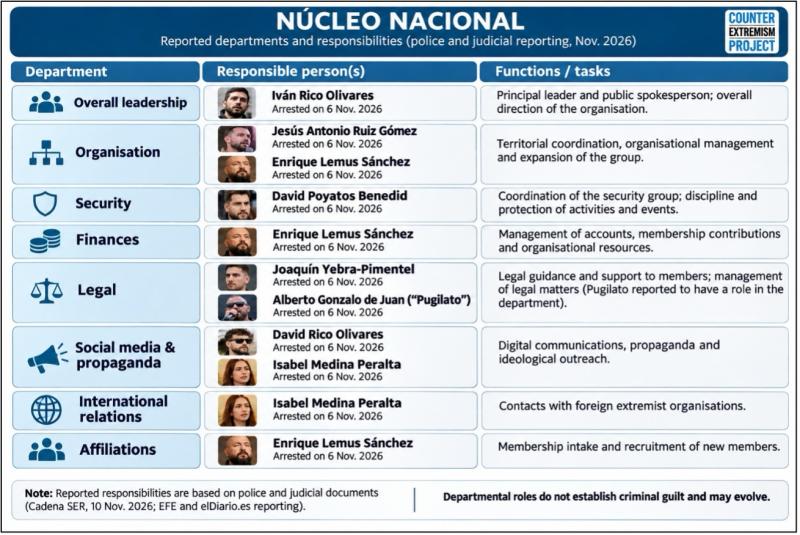
Figure 1: Núcleo Nacional’s Infrastructure
Available estimates of NN's membership vary considerably, making the organisation's actual size difficult to establish. In November 2025, police sources estimated approximately 1,500 paying members. NN subsequently claimed 1,100 militants in July 2026 and and 2,000 “affiliates” in October, without clarifying whether the latter included only active, dues-paying members or a broader pool of supporters. These figures are therefore insufficient to establish a reliable growth trajectory. Nevertheless, the group’s territorial structure, dedicated recruitment department and regular membership activities indicate an organisation seeking to consolidate and expand its reach.
Digital outreach is central to these efforts. NN uses professionally edited videos, internet memes and a video podcast to disseminate its ideology. Its public figures, including Iván Rico Olivares, have used existing online audiences to amplify the movement’s messages, while his brother David Rico reportedly oversees its digital propaganda.
Isabel Medina Peralta plays a particularly prominent role in this online ecosystem. A former leader of Bastión Frontal and one of NN’s most recognisable public figures, she regularly uses her personal Instagram and TikTok accounts to disseminate the movement’s ideology and messages, alongside her participation in NN’s propagandising. In April 2025, she was sentenced to one year in prison for incitement to hatred against Moroccan immigrants and Muslims during a 2021 demonstration outside the Moroccan embassy in Madrid. An appeals court upheld the conviction in July 2026. Peralta’s continued online activity illustrates how established extremist personalities can use their individual profiles to reinforce organisational messaging and maintain visibility beyond official group channels. Branded clothing, other merchandise and a recognisable visual identity further reinforce NN's public presence.
Online activities are complemented by physical spaces that facilitate recruitment, ideological socialisation and interaction among members. In June 2025, NN opened El Nido (The Nest), a headquarters on more than 400 square metres in Madrid’s Las Tablas neighbourhood. The property included a private gym and facilities for meetings, conferences and other activities, such as ideological reading groups, intended to foster collective identity and discipline. The combination of combat sports, ideological activities and community building resembles recruitment approaches observed among other right-wing extremist networks, such as Active Clubs, without implying an organisational affiliation.
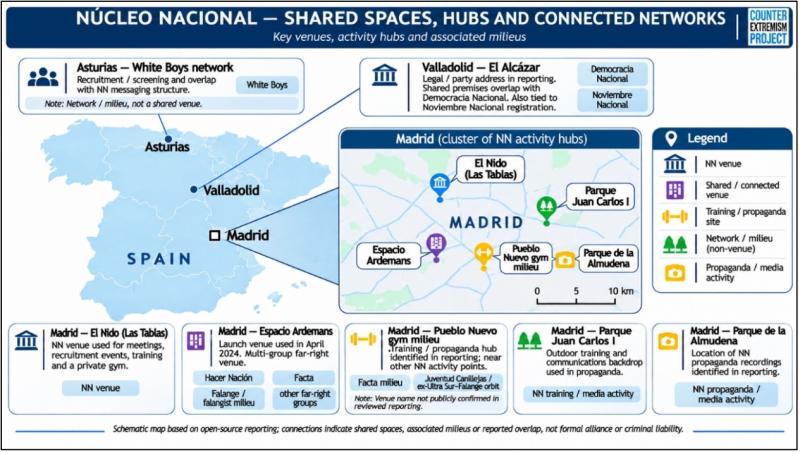
Figure 2: Núcleo Nacional—Spaces, Hubs and Networks
NN’s use of physical infrastructure extends beyond its own headquarters. Its public launch in April 2024 took place at Madrid’s Espacio Ardemans, a venue also used by organisations including Hacer Nación, fascist and national syndicalistLa Falange and neo-Nazi Facta. NN registered its legal address at Calle Renedo 10 in Valladolid, the location of El Alcázar (The Fortress), a far-right social centre that previously served as headquarters for Democracia Nacional. In Madrid’s Pueblo Nuevo neighbourhood, NN members used a gym which had previously been frequented by a Factaleader for combat-sports training and propaganda videos. NN propaganda also included recordings in nearby Parque de la Almudena, while separate footage showed members practising combat sports in Madrid’s Parque Juan Carlos I.
While shared or successive use of a venue does not necessarily establish formal organisational cooperation, connections between extremist milieus can facilitate recruitment and mobilisation. The relationship between NN and White Boys Asturias provides a more concrete example of this facilitation and also shows how local networks associated with violent activity can become connected to a wider movement seeking territorial expansion and a more organised structure. Law enforcement recovered WhatsApp conversations from September 2024 showing members of the Asturias-based neo-Nazi youth group screening prospective NN recruits, questioning their ideological commitment and seeking to identify infiltrators. White Boys was also investigated for organised racist attacks, targeted harassment and intimidation, and the recruitment and ideological indoctrination of minors.
Investigators identified a more direct recruitment relationship between NN and White Boys Asturias, linking Jesús Antonio Ruiz Gómez, head of NN’s Organisation Department, to the recruitment and ideological indoctrination of young members of the Asturias network. One minor reportedly identified Ruiz as the founder of White Boys, while intercepted messages showed him directing prospective recruits towards NN’s communication channels. Additionally, approximately twenty members of the Asturias youth network also participated in a larger NN messaging group.
NN’s digital outreach, physical infrastructure and recruitment networks suggest that the movement seeks to consolidate its position within Spain’s extremist milieu. Its expanding international connections reveal a further dimension of that ambition, raising questions about whether relationships established abroad extend beyond ideological solidarity and political exchanges.
International Connections and Paramilitary Ambitions
According to findings by Spain’s National Police, NN maintained contacts with approximately 20 organisations across 14 countries, coordinated in part through the International Relations Department, reportedly headed by Isabel Medina Peralta.
These relationships range from ideological solidarity and participation in international demonstrations to direct meetings with foreign extremist organisations. In May 2025, NN activists participated in a far-right demonstration in Gera, Germany, alongside members of the neo-Nazi organisation Der Störtrupp. On November 8 that year, a delegation from Germany’s Der III. Weg, led by chairman Matthias Fischer, participated in an NN demonstration in Madrid, visited its headquarters and met Medina Peralta. Der III. Weg publicly described the relationship between the two groups as a longstanding political friendship. Other reported NN contacts involve extremist movements in Italy, France, Hungary, Romania, Bulgaria and Croatia. The organisation advertised numerous foreign groups as participants in a demonstration planned for November 7, 2026, although the event did not take place due to the police operation the previous day.
NN has also pursued transatlantic relationships. Specifically, NN’s ties to the American white-supremacist organisation Patriot Front appear to have developed beyond occasional expressions of ideological solidarity. Following meetings in Paris in May 2026, representatives of both movements met again in Madrid, where they jointly visited Cuelgamuros. In July, NN publicly announced plans to formalise their relationship, although the group’s leadership subsequently acknowledged that no formal alliance had yet been established.
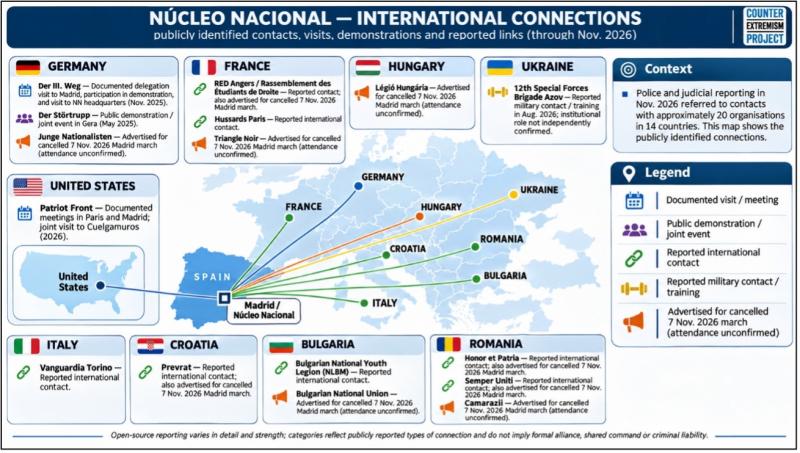
Figure 3: Núcleo Nacional—International Connections
Documented meetings and shared demonstrations do not necessarily imply formal alliances, operational coordination or common organisational objectives. However, findings concerning NN’s activities in Ukraine suggest a potentially more consequential development: the movement’s apparent interest in using international contacts to acquire military capabilities it can use domestically.
The Ukraine Trip: Five Travellers and Reported Military Training
On August 22, 2026, five NN members, including Iván Rico Olivares, departed for Ukraine following preparations documented in intercepted communications. Police subsequently identified at least two participants who reportedly received paramilitary training involving assault rifles and pistols. Images circulated online showed militants wearing tactical equipment and handling AK-47-type rifles, with one wearing a bulletproof vest displaying Nazi insignia.
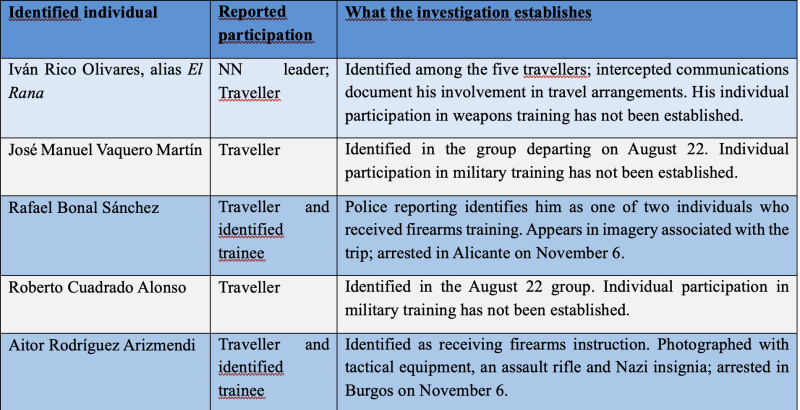
Table 1: Núcleo Nacional members who travelled to Ukraine, as identified by police investigations. Sources: EFE, November 10, 2026; Cadena SER, November 10, 2026.
The investigation also documents contacts with the Ukrainian National Guard’s 12th Special Forces Brigade Azov. Azov originated in 2014 as a volunteer battalion with far-right and neo-Nazi-linked members, but its subsequent institutional evolution requires an important distinction. The broader extremist Azov movement should not be conflated with the military formation integrated into Ukraine’s state forces. That distinction is particularly relevant here: available evidence does not independently establish who provided or authorised NN’s reported training, or whether an institutional relationship existed with the brigade. Nor is there evidence that the five travellers participated in combat. More significant are investigators’ findings concerning the intended use of that training.
On August 12, ten days before the group’s departure, investigators intercepted a conversation about the need for military instruction to make a possible armed uprising viable. Subsequent communications suggested that skills acquired abroad were intended to be transferred to militants within NN’s territorial delegations in Spain. This risk had already been identified in CEP’s March 2022 assessment of extremist foreign fighters, which warned that violence-oriented extremists could return from Ukraine with military experience and transnational contacts that might strengthen extremist networks at home.
NN has publicly denied allegations that it was preparing for an armed uprising. While the National Police investigation, conducted under the authority of Investigating Court No. 1 in Gijón, has identified discussions of such a possibility, no concrete insurrection plan or evidence that military training acquired in Ukraine was subsequently transferred to NN members in Spain has been publicly established.
The investigation has nevertheless uncovered further indications of violent intent and potential access to weapons. Police reportedly found 13 long guns and ammunition at the home of NN spokesperson Isabel Medina Peralta, whose intercepted communications also included statements about using firearms during unrest in Paris in October 2026. Separately, messages exchanged in August and September 2024 among members of White Boys included discussions about attacking mosques, identifying synagogues and targeting facilities housing unaccompanied migrant minors. In one exchange, members proposed locking worshippers inside a mosque in Oviedo during prayers. Investigators also documented recruitment of minors and efforts to conceal NN affiliations when organising violent activities.
These discussions of violence predated the Ukrainian trip by approximately two years. Yet they change how the efforts to acquire military skills can be interpreted, despite the absence of evidence that the August 2026 training was intended to facilitate those violent threats. The concern is not simply that extremist individuals travelled to a conflict zone, nor only whether NN could launch an armed uprising. The central issue lies in the convergence of preexisting violent intentions, organised domestic recruitment, intended territorial expansion, and apparent efforts to acquire military capabilities through international contacts. The case illustrates why these different dimensions of extremist activity cannot be assessed in isolation.
Beyond Recruitment: Understanding the Extremist Ecosystem
Political polarisation and social unrest are often understood as conditions that enable extremist organisations to expand their reach, attract new recruits and, potentially, increase their capacity for violence. Yet this is only part of the picture. An organisation’s capabilities are not determined solely by its membership or public support. They are also shaped by the relationships it maintains with other actors within a wider extremist ecosystem.
Like other ecosystems, extremist environments consist of interconnected actors whose activities may influence and reinforce one another, even without formal cooperation. Established organisations can provide access to recruitment networks and physical infrastructure; individual activists may connect otherwise separate movements; and international relationships can facilitate exchanges of resources, expertise and specialised knowledge. These interactions may allow relatively marginal organisations to develop capabilities they would struggle to acquire independently.
The Núcleo Nacional investigation illustrates why these relationships should not be examined in isolation. Its connections with White Boys Asturias reveal how local networks associated with violent activity can intersect with wider recruitment structures. Shared premises and physical training facilities provide opportunities for ideological socialisation and interaction, while international contacts may offer access to additional resources and experience. The significance of these relationships lies not simply in their existence, but in how their different functions might reinforce one another.
The reported military training in Ukraine makes this distinction particularly relevant. The ongoing investigation may help clarify whether the experience acquired abroad was subsequently transferred to other NN members, and whether the organisation’s domestic recruitment and training structures could have facilitated such a process. Similarly, the relationship with White Boys raises questions about possible overlaps between individuals associated with violent activity and those involved in NN’s organisational or security functions. Financial scrutiny has also intensified: on November 12, a judge ordered the freezing of NN’s bank accounts and those of its investigated members. While membership fees and individual financial contributions have been documented, questions remain about the financing of the group’s physical infrastructure, recruitment activities and international travel. These are not necessarily gaps in the authorities’ investigation, but questions whose answers could significantly affect our understanding of NN’s capabilities.
More broadly, the case highlights the importance of a network-based approach to assessing violent extremism. Rather than treating every international contact or shared organisational space as evidence of cooperation, analysis should distinguish between ideological affinity, recruitment relationships, material support and exchanges that may contribute to operational capabilities. This is particularly relevant to cross-border activities, where the distinction between individual contacts and institutional cooperation matters. For European counterextremism policy, the wider lesson is the importance of assessing whether individuals returning from conflict environments are connected to established violence-oriented organisations and whether their experience has implications for domestic security. Such assessments must remain grounded in documented conduct and indications of violent intent, rather than foreign travel alone.
For Spain, these considerations extend beyond the Núcleo Nacional investigation. Political polarisation and social unrest may create opportunities for extremist actors to gain visibility and approach new audiences, without implying broader public endorsement of their ideology. But the more consequential question is what those actors can do with such opportunities when they are already embedded in wider domestic and transnational networks. Understanding the development of violent extremism therefore requires looking beyond the conditions that facilitate recruitment to the relationships through which a relatively marginal movement may acquire greater organisational and potentially violent capabilities.
Stay up to date on our latest news.
Get the latest news on extremism and counter-extremism delivered to your inbox.