Extremist Content Online: Finnish Rap Group Promotes Active Club Movement on YouTube and Spotify
(New York, N.Y.) — The Counter Extremism Project (CEP) reports on the methods used by extremists and terrorist groups on the Internet to spread propaganda and incite violence. In this week’s issue:
- ISIS Activity Roundup
- ISIS Al-Naba Editorial Encourages Overcoming Challenges and Following Through
- Pro-ISIS Tech Group Posts Cyber and Operations Security Advice, Posts Table on Communications Platforms and Browsers
- Finnish Rap Group Promotes Active Club Movement on YouTube and Spotify
- Florida Active Clubs Announce Split
ISIS Activity Roundup
Between September 20 and 26, ISIS claimed credit for 15 attacks. ISIS claimed responsibility for nine attacks in Nigeria, two in the Democratic Republic of the Congo, two attacks in Pakistan, one in Niger, and one in Iraq.
As of September 28, ISIS claimed responsibility for four attacks in Iraq in September. Two attacks occurred in Kirkuk Governorate and two in Al-Anbar Governorate. This is the highest monthly number of attacks in Iraq in the past year. ISIS claimed responsibility for one attack in May, three in December, and two in September 2025.
ISIS Al-Naba Editorial Encourages Overcoming Challenges and Following Through
The editorial in issue 566 of ISIS’s al-Naba newsletter, released on September 24, noted the importance of preparation, overcoming challenges, and following through with action. The editorial stated that ISIS’s declaration of the caliphate in 2014 was the most important event in modern history and began a new era of fighting between believers and unbelievers. The authors noted the international community’s disunity and affirmed the importance of defending the faith. The editorial concluded by declaring that eventual victory would come, but it was necessary to fight for it.
Pro-ISIS Tech Group Posts Cyber and Operations Security Advice, Posts Table on Communications Platforms and Browsers
On September 22, a pro-ISIS tech group posted cyber and operations security advice on RocketChat. The post noted that multiple security measures were necessary, and that relying only on passwords, facial recognition, or fingerprint scanners to unlock mobile devices or computers was not secure enough.
The post encouraged running anti-malware software, avoiding suspicious links or downloads, restricting or refusing app permissions, and staying aware of tactics such as phishing, man-in-the-middle attacks, and web browser exploits.
The group provided tips including using standalone apps, using multiple profiles and browsers, encryption, and not storing passwords in browsers.
The post also included a table listing which communications platforms can be used on different browsers or operating systems. Listed communications apps included: Telegram, X, Facebook, RocketChat, XMPP, Session, Signal, SimpleX Chat, Android mobile call, Gem Space, Threema, Instagram, and WhatsApp. The browsers or operating systems included Linux, Windows, Android, Firefox, and Tor.
Other infographics encouraged avoiding the Google Play Store because it tracks users and suggested F-Droid or the Aurora Store as alternatives.
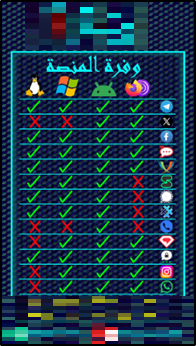
Infographic from pro-ISIS tech group posted on RocketChat on September 22.
Finnish Rap Group Promotes Active Club Movement on YouTube and Spotify
CEP researchers located a YouTube account that posted two videos from a Finnish rap group that promotes the white supremacist Active Club movement.
The account was created on June 30, 2026, and had about 25,000 views for two videos uploaded on July 9 and September 17. The videos contain lyrics promoting the Active Club movement, including specifically naming a Finnish Active Club chapter and glorifying violence against anti-fascist and left-wing activists. In one video, members of the rap group wear balaclavas made by an Active Club-affiliated clothing brand. The YouTube account and videos were advertised on several Active Club Telegram channels.
Robert Rundo, the Active Club co-founder and figurehead, has promoted the use of white supremacist music, including rap and hip hop, to appeal to youth and build a durable counterculture.
The two songs were also uploaded to Spotify, where they received approximately 24,200 and 2,700 listens as of September 24, after being uploaded on July 10 and September 18, respectively.
CEP researchers reported the two songs and accounts to YouTube and Spotify on September 24. As of September 28, they were still available on both platforms. The accounts on both online services did not use Active Club or white-power logos or symbols, likely to evade content moderation.
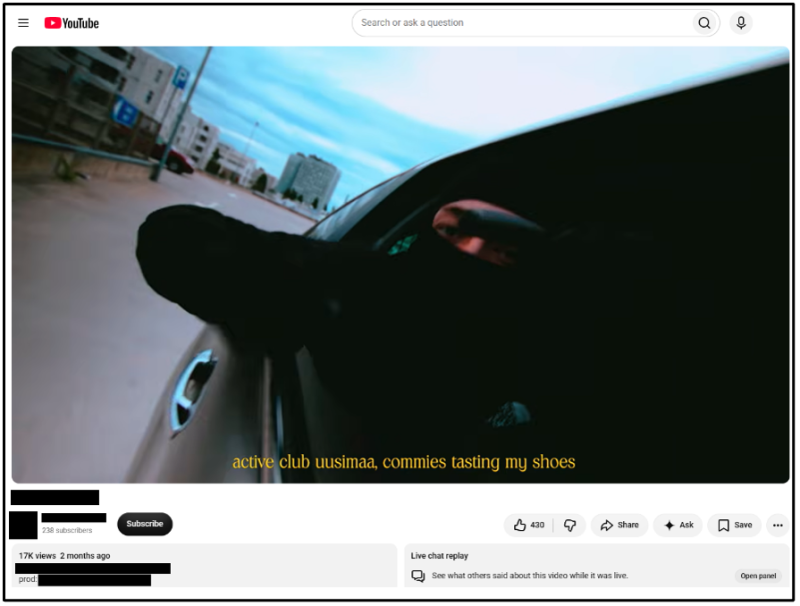
Video promoting Finnish Active Clubs on YouTube. Screenshot taken on September 24.
Florida Active Clubs Announce Split
On September 15, a Telegram channel affiliated with the main Florida Active Club chapter accused a Southwest regional chapter of trying to take control of the movement within the state. The post alleged that some Active Club members, seeking more centralization and what it called “a non-Active Club style of leadership,” had demanded that the founder of the Florida Active Club resign, and that he refused. The post also accused Southwest Florida Active Club members of deleting two years of content from the main Telegram channel and changing the regional account to appear to represent all of Florida.
Previous ruptures in the Active Club movement have included demands that an alleged rogue chapter in Illinois stop using the movement’s name and branding and the self-disbandment of an anti-Patriot Front Texas chapter.